
Useful Software
Saturday, 11 April 2026, 10:16 AM
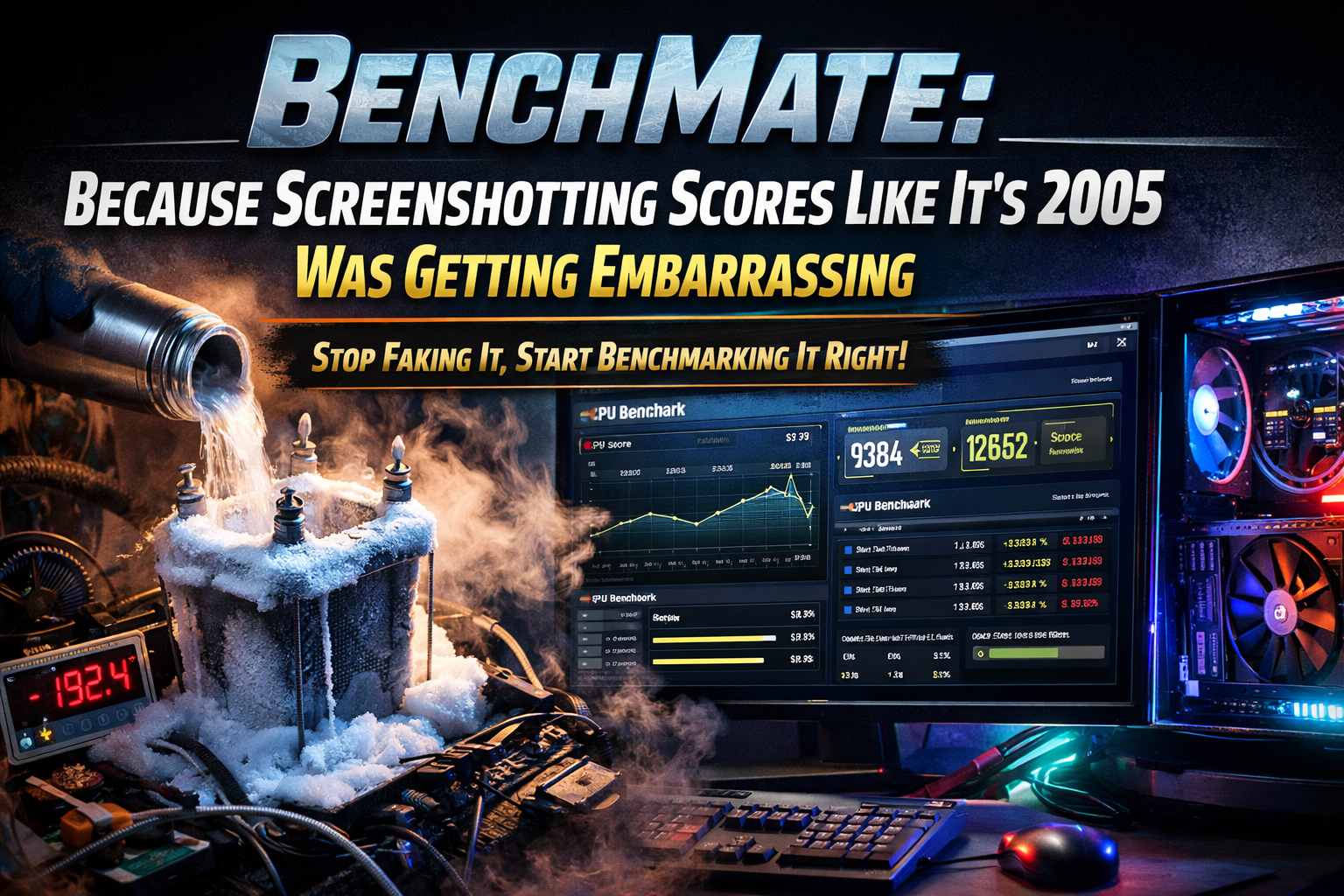
BenchMate: Because Screenshotting Scores Like It’s 2005 Was Getting Embarrassing

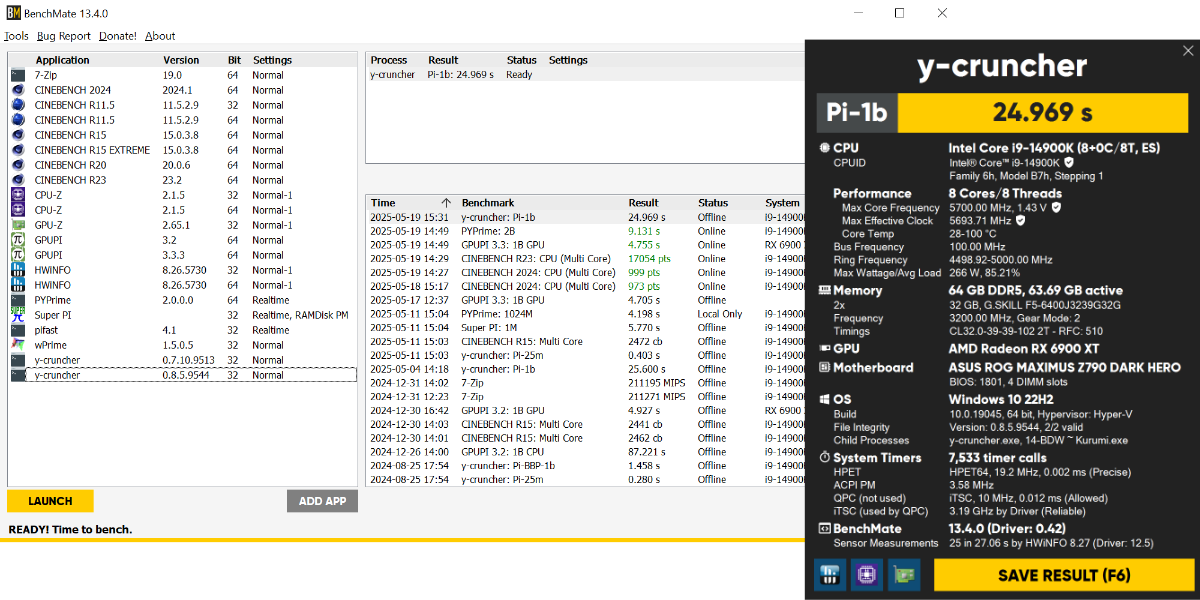
<p>Let’s talk about BenchMate, the benchmarking tool that finally looked at the chaotic mess of “trust me bro, I got this score” and said, yeah… we’re not doing that anymore. If you’ve spent any time in the benchmarking or overclocking scene, you already know the drill: run a benchmark, take a screenshot, hope nobody notices the 17 background apps you “forgot” to close, and post it like you just broke physics. BenchMate comes in like that one friend who actually reads the rules and quietly ruins everyone’s fun… in the best possible way.</p><p>The biggest pro with BenchMate is simple: legitimacy. It locks down the environment, validates results, and removes a ton of the sketchiness that has haunted benchmarking communities forever. Compared to tools like CPU-Z or 3DMark, which are great but still rely heavily on user honesty, BenchMate basically says, “Nope, we’re doing this properly.” It standardizes runs, minimizes background interference, and makes scores actually comparable without needing a forensic investigation. For anyone who’s serious about performance testing, that’s a huge win.</p><p>Another thing I genuinely like is how BenchMate integrates with competitive benchmarking platforms. It plays nicely with HWBOT, which is basically the Olympics for people who think liquid nitrogen is a reasonable weekend hobby. That integration means your results aren’t just numbers on your screen, they’re verified, accepted, and respected. And let’s be honest, if you’re going to spend hours tweaking voltages and praying your system doesn’t spontaneously become modern art, you want that recognition.</p><p>Now, let’s talk cons, because nothing is perfect, not even the software equivalent of a hall monitor. BenchMate can feel restrictive. If you’re used to casually running benchmarks while your system is doing 47 other things, it’s going to shut that down real quick. There’s a bit of a learning curve, and it can be picky about environments, which might frustrate more casual users who just want a quick score without jumping through validation hoops. Also, compared to something like Cinebench, which you can fire up in seconds and get a number, BenchMate feels more like preparing for an exam than taking a quick quiz.</p><p>That said, that “restriction” is also exactly why I prefer it. BenchMate forces consistency and fairness, which is something benchmarking has needed for a long time. It removes the gray area, the “maybe this is legit, maybe it’s not” nonsense, and replaces it with actual confidence in the results. Sure, it’s a little stricter. Sure, it’s less forgiving. But that’s kind of the point. If you care about real performance and not just flexing inflated numbers on the internet, BenchMate is the better tool.</p><p>At the end of the day, BenchMate isn’t trying to be the easiest benchmarking software. It’s trying to be the most trustworthy. And honestly, in a space where screenshots used to pass as proof, that’s a pretty refreshing upgrade.</p><p>
<br></p>
Comments 0
