
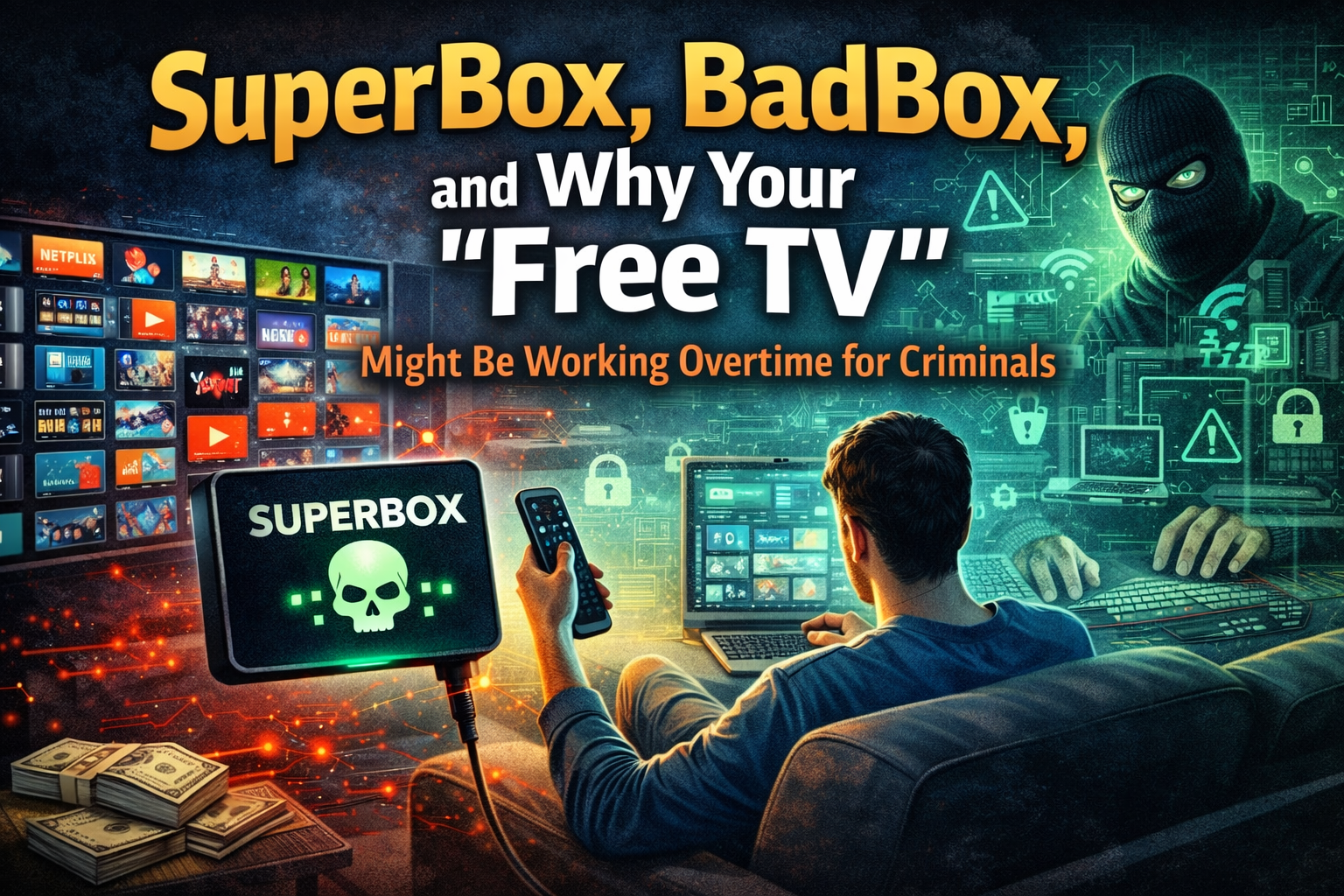

Let’s talk about that magical little box. You know the one. The “no monthly fee, everything unlocked, watch literally anything ever created since the invention of electricity” box. Yeah… that one. Commonly sold under names like SuperBox, vSeeBox, and about 47 other brands that sound like they were generated by a password generator, these Android streaming boxes promise you one thing: why pay for Netflix when you can pay once and get everything forever? And honestly, if that sentence didn’t already set off alarms in your brain, we need to have a different conversation.
At its core, a SuperBox is just an Android-based streaming device. Nothing crazy there. The catch is what it’s designed to do. These boxes run third-party apps that magically unlock premium content without actually paying for it. Translation: it’s not Netflix, it’s Netflix-ish… just with a side of legal gray area and a sprinkle of “maybe don’t Google this too hard.”
Now let’s turn things up a notch. Security researchers and the FBI have been raising alarms about something called BadBox, or its sequel nobody asked for, BadBox 2.0. This isn’t your typical annoying malware that gives you popups for “hot singles in your area.” This is a full-blown botnet operation that has infected millions of devices. In some cases, the malware is already installed before you even plug the device in. Yes, you can literally open the box, set it up, and unknowingly join a cybercrime network before you even pick a show.
While you’re sitting there watching free sports and feeling like you beat the system, your little streaming box might be busy doing a whole lot more than buffering. It can become part of a botnet, meaning hackers can control it remotely and use it along with thousands or millions of other devices. Your internet connection might be turned into a residential proxy, letting strangers route their activity through your home network. So when something shady happens online, guess whose IP address it might point back to? Spoiler alert: yours.
On top of that, these devices can be used for ad fraud, credential stuffing, and other delightful internet crimes, all running quietly in the background while you binge-watch reruns. Some variants can even poke around your local network, scanning devices and potentially intercepting traffic. So that cheap little box you plugged into your TV might also be taking a casual interest in your phone, your laptop, and anything else connected to your Wi-Fi.
The best part, and by best I mean worst, is that many of these infections happen before you even get the device. Some are preloaded at the factory, while others activate during setup through shady app stores. So even if you think you’re being careful, the device may have already come with a little “bonus feature” baked in. And no, there wasn’t a checkbox to opt out of that.
We should also probably address the legal elephant in the room. Those “free channels” aren’t exactly free in the official, licensed, totally legit sense. Most of the content being streamed through these apps is not authorized, which means you’re stepping into copyright violation territory whether you meant to or not. So while you thought you were saving money, you might actually be stacking security risks and legal risks like it’s some kind of terrible combo meal.
So why are these boxes everywhere? Because they hit the perfect storm. They’re cheap, easy to use, and promise everything for a one-time cost. People are tired of juggling multiple streaming subscriptions just to watch a handful of shows, and along comes a device that basically says, “What if I told you… you could skip all that?” It’s incredibly tempting, and that’s exactly why it works.
If you’re trying to spot a sketchy streaming box, there are a few obvious signs. If it tells you to disable security features, uses app stores you’ve never heard of, promises lifetime access to everything, or has a brand name that sounds like your Wi-Fi password, you might want to pause before plugging it in.
Here’s the reality. These boxes do work, and that’s why they’re popular. But they’re also a cybersecurity nightmare, a privacy risk, and potentially a legal headache waiting to happen. That little device sitting under your TV might actually be the hardest working thing in your house… just not for you.
At the end of the day, if something on the internet promises unlimited premium content, no monthly fees, and zero downsides, it’s usually one of four things: too good to be true, illegal, loaded with malware, or all of the above. And in this case, it’s very likely all of the above.
So yeah, that “miracle box” might not just be streaming movies. It might be quietly acting as your new, unwanted, crime-assisting roommate.
Sleep well. 😄
